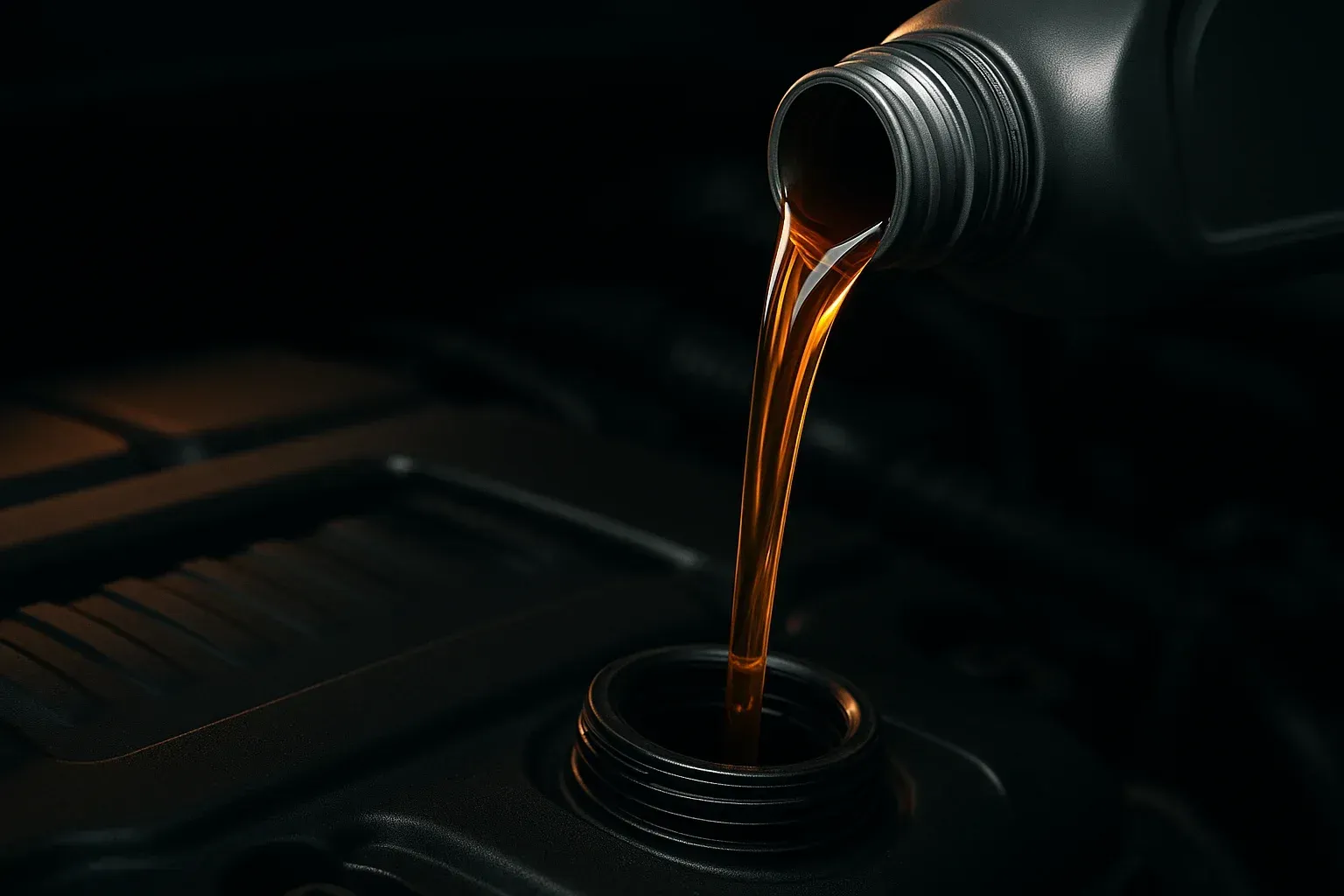
How Often Should You Change Your Oil?
Every 10,000–15,000 km or once a year is the short answer for most modern cars on synthetic oil. The right interval for your car depends on the oil, the engine and how you drive. Here is how to work it out.
Short answer: most modern petrol and diesel cars running a quality synthetic oil need an oil change every 10,000–15,000 km or once a year, whichever comes first. Older cars on conventional oil, and cars that mostly do short trips, need it sooner. Some newer European cars allow up to 30,000 km on a long-life oil. The correct interval for your car comes from three things: what the manufacturer specifies, which oil is in the engine, and how you actually drive.
The old rule of changing oil every 5,000 km comes from a time of mineral oils and carburettors. Modern engines and synthetic oils last much longer than that, but every oil still wears out in the end. This guide explains how to find the right interval for your car.
Oil change intervals at a glance
Oil typeTypical interval (normal driving)Typical interval (severe driving)Conventional (mineral) oil5,000–8,000 km or 6 months3,000–5,000 kmSynthetic blend7,500–10,000 km or 6–12 months5,000–7,500 kmFull synthetic10,000–15,000 km or 12 months7,500–10,000 kmLong-life (OEM-approved, flexible service)Up to 30,000 km or 24 months, per the car's service indicatorFollow the indicator. It shortens the interval on its own.
These are general ranges, not a replacement for your service book. If your manufacturer specifies a shorter interval, use that one.
What decides how often you need an oil change
1. The manufacturer's specification
Start with your owner's manual or service book. It lists the interval, the viscosity (for example 0W-20 or 5W-30), and the approval the oil must meet, such as ACEA C3, VW 504 00/507 00, BMW Longlife-04 or MB 229.51. Many cars made after about 2010 have a service indicator that estimates oil life from engine temperature, load and trip length. Do what it tells you rather than going by a fixed number.
2. The oil itself
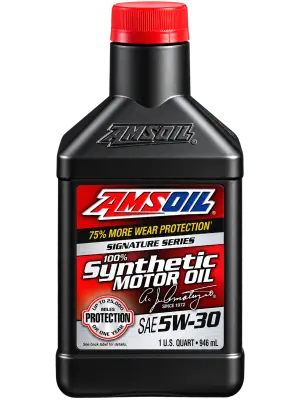
Conventional oil oxidises and thins out faster under heat, so it needs changing more often. A full synthetic resists breakdown, holds its viscosity longer and keeps deposits in suspension until the drain. This is why synthetic oil allows longer intervals and protects better through the whole interval. Premium synthetics such as AMSOIL Signature Series 5W-30 are formulated for extended drain intervals, while still meeting the specifications modern engines require.
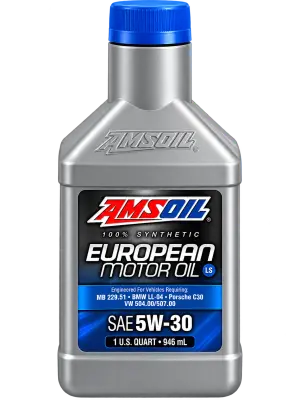
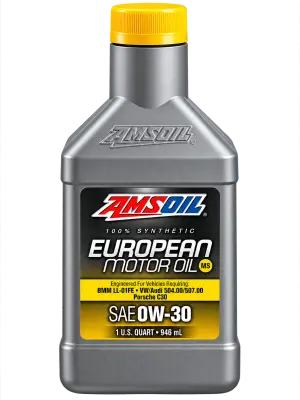
Running a European car with a particulate filter (DPF or GPF)? The oil also needs the right ash level. Our guide to AMSOIL European Motor Oils and the MS, FS and LS series explains which one fits which engine.
3. How you drive
Oil does not only wear out with distance. It also breaks down from heat, fuel dilution and moisture. That is why manufacturers list two schedules, and most drivers fall under the stricter one without realising it.
Normal vs severe driving: which one are you?
Most service manuals class the following as severe service. If any of them describes your normal week, use the shorter interval:
Mostly short trips under 10 km, where the engine never fully warms up
Frequent stop-and-go city traffic or long idling
Sub-zero winter temperatures, a normal Baltic winter
Towing a trailer or carrying heavy loads
Dusty or gravel roads
Taxi, delivery or other commercial use
Track days or sustained high-speed driving
Short trips in winter are the hardest case. A cold engine runs rich, and unburnt fuel and condensation end up in the sump. The oil gets diluted and turns acidic long before the odometer suggests it should. If that sounds like your commute, read Should I warm up my car in winter? Idling to warm up makes the problem worse, not better.
Don't forget the time limit
Low mileage does not mean the oil can stay in forever. Oil oxidises and absorbs moisture even in a car that barely moves. If you drive 5,000 km a year, still change the oil at least once every 12 months, unless your manufacturer or oil maker specifies otherwise. For cars that are stored over the winter, change the oil before storage so that used, acidic oil is not left sitting in the engine for months. A fuel stabiliser helps keep the fuel fresh at the same time.
Signs your oil change is overdue
The oil or service light is on. Book the change. Do not just reset the light.
The dipstick shows dark, gritty or sludgy oil. Diesel oil turns black quickly and that is normal, but grit or sludge is not.
The level keeps dropping between changes and you have to top up.
The engine sounds louder, with ticking or knocking on cold starts.
You smell oil or fuel in the cabin or on the dipstick. Fuel dilution is common with direct injection.
The last change was over a year ago, whatever the distance.
How to make your oil last the full interval
Use the correct specification. Viscosity and OEM approval matter more than brand. Not sure what your car takes? Use our Find the right oil lookup.
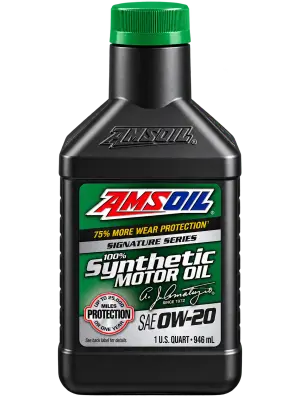
Use a full synthetic. It holds up better to heat, cold starts and fuel dilution, especially in modern turbocharged engines. Fuel-efficient Japanese and Korean engines often specify 0W-20, such as AMSOIL Signature Series 0W-20.
Change the filter every time. Fresh oil in a clogged filter does not last long.
Check the level monthly. Turbocharged and high-mileage engines often use some oil between changes.
Keep records. Dated receipts help with warranty claims and resale value.
Frequently asked questions
Can I really go 15,000 km between oil changes?
Yes, if your manufacturer allows it, you use a full synthetic that meets the specification, and you drive mostly in normal conditions. If you mostly drive short trips, tow or drive in harsh winters, shorten the interval.
Is changing oil every 5,000 km a waste of money?
For a modern car on full synthetic, usually yes. It does not harm the engine, but you are throwing away oil that still had plenty of life left. Spend that money on a better oil and filter instead.
Does synthetic oil need changing less often?
Generally, yes. Synthetic oil resists oxidation and thermal breakdown far better than mineral oil, which allows longer intervals. Always stay within what your manufacturer, or the oil's own data sheet, approves.
Do diesel engines need more frequent oil changes?
Diesel combustion produces more soot, which thickens the oil over time. Many diesel cars use similar intervals to petrol models. They need an oil with the correct diesel and DPF approvals, and heavy-duty use calls for a shorter interval. For modern diesel cars and vans, see AMSOIL 5W-40 Heavy-Duty Synthetic Diesel Oil.
Should I change the oil before or after winter?
If your next change is due within a couple of months, do it before winter. Fresh oil flows better at cold starts, and a low-viscosity synthetic such as 0W-20 or 0W-30 reaches the bearings fastest on a frozen morning.
The bottom line
For most cars on the road today, plan on an oil change every 10,000–15,000 km or once a year. Change it sooner if your driving is short-trip, cold-weather or heavy-duty, and only go longer if your manufacturer's long-life schedule and an approved oil allow it. The interval is only as good as the oil, so choose a full synthetic that matches your car's specification.
Browse car and truck motor oils, or contact us and we'll help you pick the right oil and interval for your car. Pickup is available in Riga, with delivery across Latvia, Estonia and Lithuania.